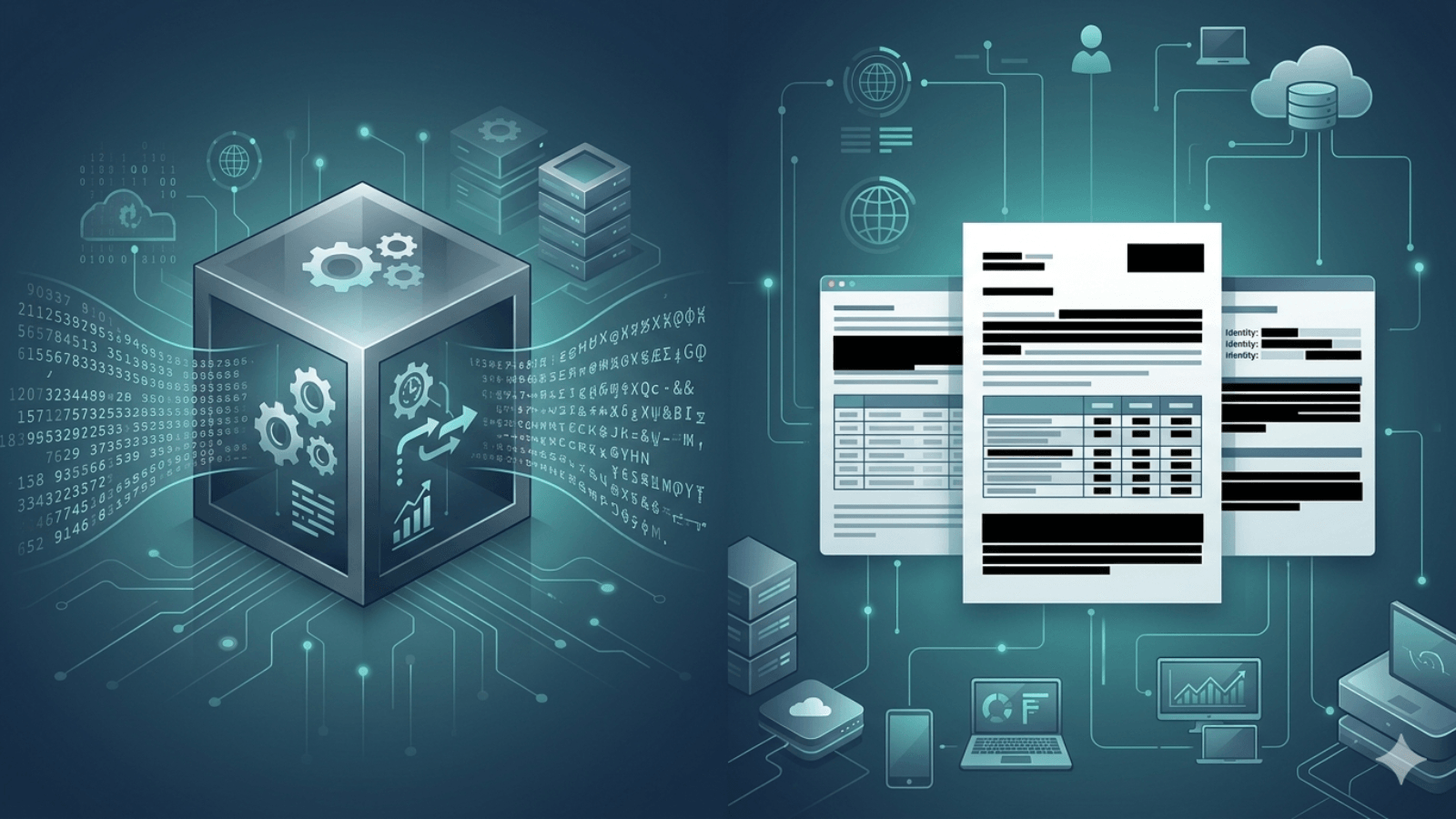
Key Takeaways
- Anonymization is an outcome, not a product feature label. Tools that mask, redact, tokenize, generalize, synthesize, or add noise are means to that outcome, and most of them do not make data anonymous by themselves.
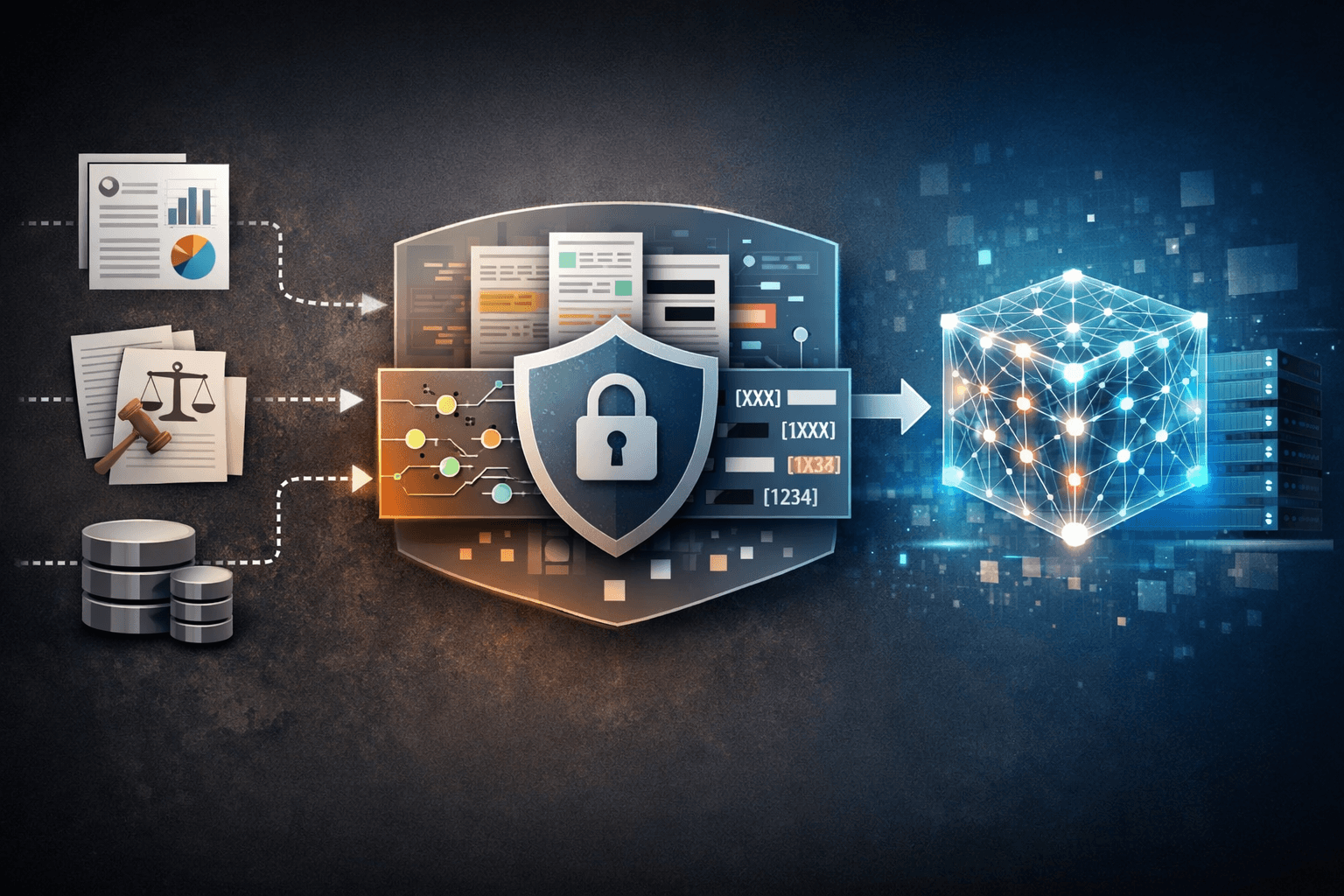
- Place protection before the model sees the text: at prompt intake, document ingestion for RAG, tool responses, training and fine-tuning corpora, and the logs those systems write.
- Pick tool classes by job. PII transformers and privacy firewalls handle live text. Statistical anonymizers and differential privacy libraries suit analytics and releases. Synthetic data platforms suit non-production and some training uses.
- Evaluate tools on detection quality for your languages and formats, policy control, restore behavior, deployment model, audit evidence, and residual re-identification risk, not on marketing checklists alone.
- Under GDPR, pseudonymized data usually remains personal data. Under HIPAA, Safe Harbor and Expert Determination are specific de-identification paths, not synonyms for every masking product.
- No tool erases inference from context. Missed entities, quasi-identifiers, and model outputs still need testing and human review for high-risk workflows.
The takeaway for security, privacy, and platform teams is practical: treat anonymization tooling as a control layer that has to cover every path data takes into AI, then prove that the control still leaves the model useful.
The sections below walk through terminology, pipeline placement, technique families, tool categories, evaluation criteria, compliance angles, and limits, and they point to deeper Privacy Café pieces when a topic already has its own guide.
What data anonymization tools actually cover
Vendors group very different products under one phrase. A library that adds noise to query results, a gateway that rewrites prompts, and a platform that generates synthetic tables may share one shortlist. Separate the job each tool is for before you compare demos.
In AI work the sensitive payload is often free text: tickets, contracts, clinical notes, chat paste. Structured fields still matter for training tables. A complete stack usually needs more than one tool class, because chat traffic and a published table fail in different ways.
Questa’s comparison of AI anonymization vs redaction spells out when removal, replacement, and true anonymization diverge. This guide stays on tool selection and placement so you do not rebuild that distinction here.
NIST’s guidance on de-identifying government datasets is a useful baseline even outside government: de-identification is a governed process with techniques, risk review, and sharing models, not a single checkbox in a product UI. Tools help; they do not replace that judgment.
Where tools sit in LLM and RAG pipelines
Start with the data path, not the feature grid. Most enterprise AI stacks leak through the same handful of stages.
Prompt and chat intake
Users paste emails, OCR text, and case notes into assistants. A privacy firewall or prompt anonymizer detects entities and transforms or blocks before the model provider receives the payload. Prompt anonymization is the pattern for that hop. Without it, other internal controls still leave the third-party model call exposed.
Document ingestion and retrieval
RAG systems embed and store chunks. If names, account numbers, and health details enter the index intact, the vector store becomes a long-lived copy of that exposure. Scrub or tokenize at ingestion, and decide what each role may retrieve. Pair this with the AI data discovery so you know which corpora feed the index.
Agent tools and memory
Agents fetch CRM records, tickets, and documents, then stuff the raw response into the next model call. Anonymization that only watches the typed prompt misses the tool payload. Memory stores that keep prior turns need the same treatment, or yesterday’s unprotected ticket reappears tomorrow.
Training, fine-tuning, and evaluation sets
Fine-tuning and eval corpora are durable copies. Scrubbing production chat while shipping raw tickets into a training bucket creates a second system of record outside the privacy perimeter. See AI training data risks rather than treating that path as an afterthought of chat DLP.
Logs, traces, and vendor telemetry
Debug logs, traces, and support exports often capture prompts and completions verbatim. Leaving raw strings in evidence defeats upstream masking. Prefer entity types, policy decisions, and hashed references over original values.
Technique families tools implement
Most products implement one or more of the following. The names overlap in marketing, so judge the behavior, not the label.
AI data masking covers partial obscuring, typed placeholders, and format-preserving substitutes for live AI traffic. Masking is often reversible in the store even when the display looks safe, so confirm where the original still lives.
Redaction removes a value or replaces it with a generic marker when nobody downstream should recover the original. Detector accuracy still decides whether it works; how to test PII detection is the companion for measurement, not a topic this article repeats.
Tokenization and pseudonymization swap identifiers for substitutes while a mapping or key can restore the original for authorized users. That helps support and casework. It is usually still personal data under GDPR when the controller can reverse it.
Generalization and suppression widen precise values into bands or drop rare combinations. They show up more in statistical release tools than in chat gateways. They reduce uniqueness; they do not automatically defeat every linkage attack.
Differential privacy adds calibrated noise so one person’s presence has a bounded effect on published results or trained models. These libraries suit analytics and some synthetic-data training, not rewriting a single support email. Projects such as OpenDP publish tooling that makes those guarantees implementable rather than purely theoretical.
Synthetic data generators create new records that mimic distributions without shipping original rows. They help non-production environments and some model development. Synthetic does not mean anonymous if the generator memorizes outliers or rare combinations still point to one person.
Tool categories you will shortlist
When you compare products, group them by primary job so demos stay comparable.
PII detection and transformation libraries
Open-source and commercial detectors find names, IDs, phones, and similar entities, then redact, mask, or replace them. They are building blocks for pipelines and plugins. You still own policy, fail-open vs fail-closed behavior, language coverage, and production hardening.
AI privacy firewalls and gateways
These sit in front of model APIs or inside approved clients. They classify content, enforce policy, transform prompts and sometimes outputs, and keep audit trails. Compare classic DLP with this pattern in AI DLP vs AI privacy firewall, and how AI privacy firewalls work for the control in practice.
Statistical anonymization suites
Tools built for k-anonymity style models, risk scoring, and controlled releases help when you publish tabular extracts. They are a poor fit as the only control on interactive LLM chat, because free text rarely behaves like a clean table of quasi-identifiers.
Differential privacy and privacy accounting libraries
These support query interfaces, training loops, and research releases where you need a formal privacy budget. Expect specialist configuration. Utility drops as protection tightens, so measure with your own metrics rather than vendor screenshots.
Synthetic data platforms
Platforms that train generators on your tables or documents aim for realistic non-production data and safer sharing. Ask how they test membership inference and similarity to source rows. If the output trains another model, treat that as a new risk review.
Enterprise data-centric security platforms
Broader suites combine discovery, classification, tokenization, encryption, and AI guardrails across warehouses and model traffic. They can unify policy, or bury AI needs under older database masking features. Run proofs of concept on real prompts and PDFs, not only structured columns.
For the wider decision process, how to choose an AI privacy solution walks through workflows, deployment models, and POC design. Use that when you move from category shortlists to vendor bake-offs.