JUL 21, 2026

AI DLP vs AI Privacy Firewall: Which Should You Choose?

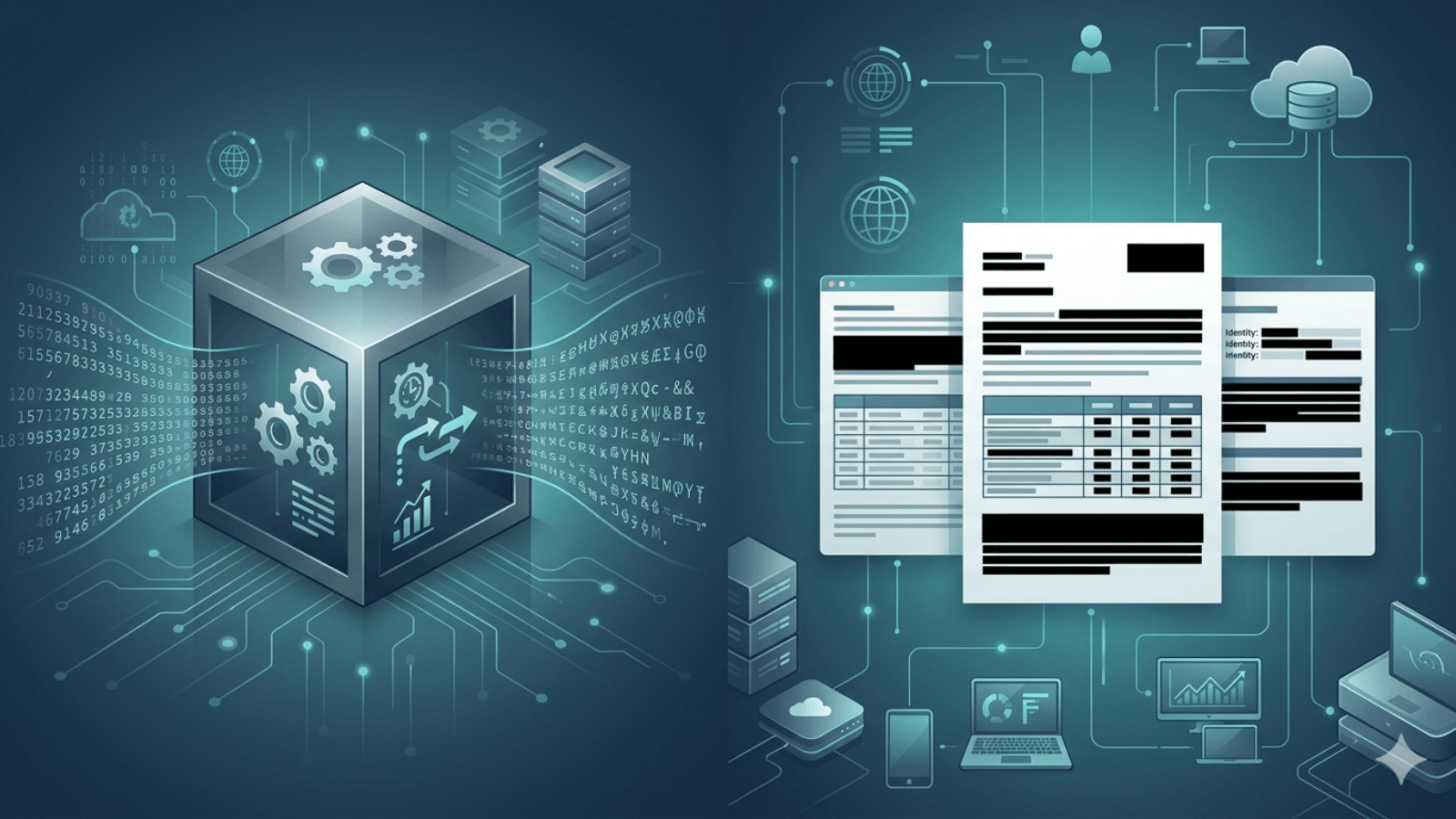
AI DLP monitors and blocks sensitive data leaving an organization through AI tools, focusing on policy enforcement and exfiltration prevention. An AI Privacy Firewall sits inline between users and LLMs, actively anonymizing or redacting personal and sensitive data in real time before a prompt reaches the model — protecting privacy by transformation, not just detection.

Key Takeaways

  • AI DLP is a monitoring-and-blocking control descended from traditional data loss prevention — it inspects prompts and outputs, classifies sensitive content, and enforces policy (allow, block, alert, quarantine).
  • AI Privacy Firewall is a real-time transformation layer that anonymizes, masks, or tokenizes sensitive data inline, so the LLM never sees raw PII, PHI, or trade secrets in the first place.
  • Neither tool is a replacement for the other in mature environments — most enterprises that get this right run both, with the firewall handling data minimization and DLP handling policy, audit, and cross-channel visibility.
  • Regulatory pressure (GDPR, HIPAA, the EU AI Act's transparency obligations that remain live from August 2, 2026) is pushing organizations toward anonymization-first architectures rather than pure detect-and-block.
  • The right choice depends on your organization's AI maturity, regulatory exposure, and whether your primary risk is data leaving the company or raw sensitive data reaching a third-party model at all.
  • Implementation complexity and cost scale differently — DLP integrates into existing security stacks faster; Privacy Firewalls require more upfront data-flow mapping but reduce long-term compliance exposure.

Six months ago, a mid-sized insurance carrier I was advising found forty-one distinct GenAI tools running inside business units nobody in security had approved. Underwriters were pasting policyholder data into ChatGPT to draft renewal letters. Claims adjusters were feeding accident reports into Gemini for summarization. None of it showed up in the CASB logs, because none of it looked like traditional data exfiltration — it looked like people doing their jobs faster. That's the moment most CISOs realize their existing DLP stack was built for a world of email attachments and USB drives, not for a world where every employee has a text box that can leak a customer database in a single prompt. It's also the moment the AI DLP vs AI Privacy Firewall question stops being theoretical and starts being budget-line urgent.

This article breaks down what each category actually does, where they overlap, where they diverge, and how to decide — with a real comparison table, not a vendor pitch dressed up as one.

What Is AI DLP? How It Works in Practice

AI DLP extends classic data loss prevention — the discipline built around Symantec, Forcepoint, and Microsoft Purview in the 2000s and 2010s — into the world of large language models. Instead of only watching file transfers, email attachments, and cloud uploads, AI DLP watches prompts going into tools like ChatGPT Enterprise, Copilot, Claude, and Gemini, and watches the responses coming back.

In practice, an AI DLP deployment usually looks like this:

  • Traffic interception — a browser extension, network proxy, or API gateway sits between the employee and the AI application.
  • Content classification — the tool uses regex, machine learning classifiers, or fingerprinting (similar to Microsoft's Exact Data Match) to detect patterns like credit card numbers, source code, or contract language.
  • Policy enforcement — based on classification, the system allows, warns, blocks, or redacts the request before it reaches the model.
  • Logging and audit — every match, block, and override gets logged for compliance reporting, which matters enormously once auditors start asking for evidence under frameworks like the NIST AI Risk Management Framework.

The strength of AI DLP is that it plugs into an existing security operations workflow. Most enterprise security teams already have DLP policies, SIEM integrations, and incident response playbooks. Extending those into AI channels is often faster politically than introducing a brand-new control category — it's still "DLP," just with a new data source.

The weakness is that AI DLP is fundamentally a detection and blocking model. It's good at stopping obvious violations — someone pasting a full customer export into a prompt. It's much weaker at handling the gray area: an underwriter who needs to summarize a real claim file, PII and all, to get useful output from the model. Block that prompt and you've killed productivity. Allow it and you've sent regulated data to a third party. This is precisely the gap that AI Privacy Firewalls were built to close, and it's a topic worth covering as part of any broader AI Governance program.

What Is an AI Privacy Firewall? How It Works

An AI Privacy Firewall takes a different philosophical stance: instead of deciding whether to let data through, it changes the data before it goes through. It sits inline, typically as a proxy or SDK-level integration, between the user (or application) and the LLM endpoint.

The typical flow:

  1. Real-time entity detection — named entity recognition (NER) models identify PII, PHI, financial identifiers, and organization-specific sensitive terms (employee IDs, internal project codenames, patient MRNs).
  2. Anonymization or pseudonymization — detected entities are replaced with synthetic tokens, hashed identifiers, or format-preserving placeholders (e.g., "John Smith" becomes "PERSON_1042") before the prompt leaves the perimeter.
  3. Prompt forwarding — the anonymized prompt is sent to the LLM (GPT-4, Claude, Gemini, Copilot, or an internal model).
  4. Response rehydration — when the model responds, the firewall maps tokens back to real values for the authorized user, so the output is still useful, but no raw sensitive data ever touched the model provider's infrastructure.

This is closer to a modern take on tokenization and format-preserving encryption than to classic DLP. It's also the architecture increasingly recommended in security guidance around large-model deployments, echoing patterns discussed in the OWASP Top 10 for LLM Applications around sensitive information disclosure and insecure output handling.

The practical benefit: employees keep working with real workflows — pasting real claim files, real contracts, real patient notes — without raw sensitive data ever reaching an external model provider. The trade-off: anonymization introduces latency, requires tuning to avoid over-redaction (which degrades output quality), and needs careful handling for languages, formats, and entity types outside the default training data. This is where solid Data Anonymization practice becomes a discipline of its own, not just a checkbox.

Some vendors — Questa AI among them position their privacy firewall specifically around this inline anonymization-and-rehydration pattern rather than block/allow logic, which is a useful reference point when evaluating what "real-time" actually means in a vendor's architecture.

AI DLP vs AI Privacy Firewall: Detailed Comparison

AI DLP vs AI Privacy Firewall: Detailed Comparison
FieldAI DLPAI Privacy Firewall
PurposeDetect and prevent sensitive data exfiltration via AI toolsAnonymize/mask sensitive data before it reaches an LLM
DeploymentBrowser extension, network proxy, CASB, endpoint agentInline proxy, API gateway, SDK-level integration
Sensitive Data ProtectionReactive — blocks or flags after detectionProactive — transforms data before exposure
Prompt ProtectionScans prompts for policy violationsRewrites prompts to remove/replace sensitive entities
ChatGPT ProtectionBlocks/monitors ChatGPT usage via browser or network controlsAnonymizes data sent to ChatGPT in real time, then rehydrates responses
Supported LLMsTypically GPT-4, Copilot, Gemini (via browser/network visibility)GPT-4, Copilot, Claude, Gemini, and often internal/custom LLMs via API
Data AnonymizationLimited — usually redaction or blocking, not reversible tokenizationCore capability — NER-based masking, tokenization, format-preserving anonymization
Policy EnforcementStrong — granular allow/block/alert rules, org-wide policy setsModerate — policy governs what gets anonymized, not what gets sent
ComplianceStrong audit trail for GDPR, HIPAA, internal policy violationsStrong for data minimization principles under GDPR Art. 25, HIPAA de-identification
User ExperienceCan feel restrictive — blocked prompts interrupt workflowGenerally seamless — users keep working, data is invisibly protected
Enterprise ReadinessHigh — mature category, integrates with existing SOC toolingGrowing — newer category, fewer legacy integrations
Deployment ModelCloud, on-prem, or hybrid via existing DLP infrastructureUsually cloud proxy or self-hosted gateway, API-first
ScalabilityHigh — leverages existing DLP scaling patternsHigh, but latency scales with entity-detection complexity
Implementation ComplexityModerate — extends existing DLP policy engineModerate to high — requires data-flow mapping and entity taxonomy tuning
CostOften bundled into existing security suites (Purview, Forcepoint)Typically a distinct line item; priced per seat, API call volume, or data volume
Best Use CasesRegulated industries needing audit trails and policy-based blocking of shadow AIOrganizations needing employees to use real sensitive data with LLMs safely

Key Differences and Similarities

The core difference is philosophical: DLP asks "should this go through?" while a Privacy Firewall asks "how do I make this safe to go through?"

That distinction matters more than it sounds. A DLP-only approach forces a binary choice on every prompt containing sensitive data — block it (kill productivity) or allow it (accept risk). A Privacy Firewall sidesteps the binary by transforming the data itself, which is why it tends to produce a better Enterprise AI Strategy outcome for teams whose whole value proposition depends on using real data with AI tools.

They're similar in three important ways. Both need real-time inspection of prompts and responses. Both need to classify sensitive data accurately — a false negative in either tool has the same downstream consequence. And both generate audit trails that matter for AI Compliance reporting, whether you're demonstrating GDPR data minimization or HIPAA's minimum necessary standard.

Where they part ways operationally: DLP tools generally don't rewrite content, they gate it. Privacy Firewalls generally don't gate content outright — a poorly tuned firewall might occasionally allow a prompt through with imperfect anonymization, whereas a DLP tool's failure mode is usually an outright block or an outright leak, with no middle transformation step.

Real Enterprise Use Cases by Industry

Financial services. A regional bank I worked with used AI DLP to stop loan officers from pasting full credit applications into unsanctioned AI tools — a straightforward exfiltration problem, well-suited to policy-based blocking, and directly tied to regulatory obligations under GLBA and state privacy law.

Healthcare. A hospital system needed clinicians to keep using ChatGPT-style tools to draft discharge summaries but couldn't let patient identifiers reach OpenAI's infrastructure under HIPAA's Business Associate Agreement constraints. An AI Privacy Firewall anonymized MRNs, patient names, and dates of birth inline, then rehydrated the summary for the clinician — the underlying workflow that de-identification frameworks under HIPAA's Safe Harbor method are designed to support.

Insurance. The carrier from this article's opening ran both. DLP flagged and blocked bulk data exports going into unapproved tools. The Privacy Firewall let claims adjusters keep summarizing real claim files by anonymizing claimant PII before it reached the model, then mapping it back for the adjuster's screen.

Legal and professional services. Law firms handling privileged material lean heavily on Privacy Firewalls — attorney work product and client identities get anonymized before any drafting assistance touches a third-party model, preserving privilege arguments that raw data exposure could undermine.

Public sector and critical infrastructure. Government agencies, increasingly guided by frameworks like ENISA's threat landscape reporting on AI systems, tend to favor DLP-first deployments because procurement and audit requirements favor policy-based, well-documented blocking over newer anonymization architectures — though this is shifting as agencies build AI Audit Checklist processes that expect data minimization by design.

Can They Be Used Together? When and How

Yes — and in mature enterprise environments, this is increasingly the default rather than the exception.

A layered architecture typically looks like this:

Layer 1 — AI Privacy Firewall sits closest to the user, anonymizing PII, PHI, and sensitive identifiers in real time before any prompt leaves the corporate boundary.

Layer 2 — AI DLP sits at the network or endpoint level, providing policy enforcement, shadow AI discovery, and audit logging across every AI tool in use — including the ones the firewall doesn't yet cover.

This mirrors defense-in-depth thinking already familiar from frameworks like NIST's AI Risk Management Framework, which emphasizes layered controls rather than single-point solutions for managing AI risk across the system lifecycle.

The practical sequencing for most organizations: start with AI DLP for visibility — you can't protect what you can't see, and shadow AI discovery is almost always the first fire to put out. Once you have an accurate map of which tools are in use and what data is flowing where, introduce a Privacy Firewall for the highest-risk, highest-value workflows — the ones where blocking isn't an acceptable answer and raw data exposure isn't an acceptable risk.

Common Pitfalls and Best Practices

Pitfall: treating AI DLP as "set and forget." Sensitive data patterns evolve. A DLP policy tuned for last year's data schema misses new identifiers. Review classification rules quarterly, not annually.

Pitfall: over-redaction breaking output quality. Privacy Firewalls tuned too aggressively strip context the model needs, producing generic or unhelpful responses. This is the single most common complaint from early Privacy Firewall deployments — tune entity detection against real production prompts, not synthetic test data.

Pitfall: assuming browser extensions cover API traffic. Many DLP tools only see browser-based AI usage. Once developers start calling GPT-4 or Claude directly via API, browser-level DLP goes blind. You need API gateway coverage, not just endpoint visibility.

Pitfall: no incident response plan for AI-specific leaks. Traditional DLP incident response assumes file-based exfiltration. AI leaks look different — a single prompt, a single response, gone in seconds. Build playbooks specific to prompt-based data loss.

Best practice: map data flows before choosing a tool. Understand which business units are sending what kind of data to which models before selecting DLP, a Privacy Firewall, or both. This mapping exercise is also foundational to any Enterprise AI Security program and to EU AI Act documentation obligations.

Best practice: align control choice to data sensitivity, not tool popularity. Public marketing copy doesn't need a Privacy Firewall. Patient records do. Match control rigor to actual risk.

Best practice: get legal and compliance in the room early. Microsoft's guidance on securing Copilot deployments and Google Cloud's security documentation for Vertex AI both emphasize that governance decisions made without compliance input tend to get re-litigated six months later, at higher cost.

Future Trends and Secure Adoption Patterns for Generative AI

Three trends are shaping where this market goes next.

Regulatory convergence is forcing anonymization-first architectures. With the EU AI Act's transparency obligations under Article 50 — chatbot disclosure, AI-content marking, deepfake labeling — remaining in force from August 2, 2026 regardless of the broader high-risk timeline extensions negotiated through the Digital Omnibus, and GDPR's data minimization principle continuing to apply in parallel, organizations operating in the EU can't treat "block sensitive data" as sufficient. Regulators increasingly expect data minimization by design, which favors Privacy Firewall-style architectures over block-only DLP.

Native model provider controls are maturing, but not replacing third-party layers. OpenAI's enterprise security documentation and Microsoft's Copilot security guidance both describe growing data handling and retention controls at the platform level. That's meaningful, but it doesn't eliminate the need for an independent control layer — enterprises still need visibility and enforcement that isn't dependent on trusting a single vendor's default configuration.

Consolidation is coming, but not yet. Expect DLP vendors to acquire or build anonymization capabilities, and Privacy Firewall vendors to add policy engines. Until that consolidation matures, most enterprises will run best-of-breed combinations rather than a single unified product.

The organizations getting ahead of this are the ones building AI risk management into their broader security architecture now — treating this as an extension of Enterprise AI Security and AI Governance rather than a bolt-on project handled by a single team in isolation.

Final Recommendations by Organizational Maturity

Early-stage AI adopters (shadow AI is your biggest risk). Start with AI DLP. You need visibility and basic policy enforcement before anything else matters. Get an accurate inventory of what AI tools are in use and what data is flowing through them.

Mid-maturity organizations (AI is embedded in specific workflows). Introduce a Privacy Firewall for your highest-risk, highest-value use cases — customer service, claims processing, clinical documentation — while keeping DLP for broad policy enforcement and audit coverage.

Advanced/regulated organizations (AI is core to operations, regulatory exposure is high). Run both, layered, as described above. Treat this as a permanent architectural decision, not a point-in-time tool purchase, and revisit it as part of your annual AI Audit Checklist cycle and your ongoing EU AI Act readiness work.

There's no universal right answer — the right answer is the one that matches your actual data flows, your regulatory exposure, and how much friction your workforce will tolerate before they route around your controls entirely. That last part is worth taking seriously: the insurance carrier from this article's opening didn't have forty-one shadow AI tools because employees were reckless. They had them because the sanctioned path was too slow. Whichever control you choose, if it doesn't fit inside a real workflow, people will find a way around it.

Frequently Asked Questions

What is the main difference between AI DLP and an AI Privacy Firewall?

AI DLP detects and blocks sensitive data from leaving your organization through AI tools. An AI Privacy Firewall anonymizes sensitive data in real time before it ever reaches the AI model, so the underlying workflow can continue without exposing raw PII or PHI.

Do I need both an AI DLP and an AI Privacy Firewall?

Most mature enterprises eventually run both — DLP for broad visibility, policy enforcement, and audit trails, and a Privacy Firewall for high-risk workflows where raw sensitive data can't reach a third-party model but blocking isn't a workable option either.

Does AI DLP work with ChatGPT, Copilot, Claude, and Gemini?

Yes, most AI DLP tools support browser-level and network-level monitoring across major LLM interfaces including ChatGPT, Microsoft Copilot, Claude, and Gemini, though API-level coverage varies significantly by vendor.

Can an AI Privacy Firewall slow down employee workflows?

There's some added latency from real-time entity detection and anonymization, but well-tuned Privacy Firewalls are designed to be largely invisible to end users — the goal is protection without noticeable friction.

Is AI DLP enough for HIPAA compliance?

AI DLP alone can support HIPAA compliance through audit logging and policy enforcement, but organizations handling PHI in AI workflows often need anonymization capabilities as well to meet de-identification expectations under the HIPAA Privacy Rule.

How does the EU AI Act affect the choice between AI DLP and AI Privacy Firewalls?

The EU AI Act's transparency obligations remain in force from August 2, 2026, and GDPR's data minimization principle applies in parallel — both push organizations toward anonymization-first architectures rather than relying solely on block-based DLP controls.

What is data anonymization in the context of AI security?

Data anonymization replaces or masks personally identifiable and sensitive information with synthetic values before it's processed by an AI model, reducing regulatory exposure while preserving the utility of the data for the task at hand.

Which is more expensive: AI DLP or an AI Privacy Firewall?

Costs vary by vendor and scale, but AI DLP is often bundled into existing security suites like Microsoft Purview, while Privacy Firewalls are typically a distinct investment priced by API volume, seats, or data throughput.

Can small or mid-sized businesses implement an AI Privacy Firewall?

Yes — cloud-based Privacy Firewall deployments have lowered the barrier to entry considerably, though SMBs should map their actual data flows first to avoid over-investing in capabilities they don't yet need.

What's the first step for a CISO evaluating these tools?

Map your actual AI data flows — which tools are in use, what data types are involved, and which workflows carry the highest regulatory or reputational risk — before evaluating vendors. Tool selection should follow risk mapping, not the other way around.

Conclusion

AI DLP and AI Privacy Firewalls solve adjacent but distinct problems, and treating them as interchangeable is how organizations end up under-protected in one dimension while over-restricting in another. DLP gives you visibility, policy enforcement, and the audit trail regulators and boards expect.

A Privacy Firewall gives your workforce the ability to keep using real, sensitive data with AI tools without exposing that data to a third-party model in the first place. Neither one, alone, fully answers the question enterprises are actually asking, which is: how do we let people use AI productively without creating a new, invisible category of data loss?

For most organizations, the honest answer is a layered approach — start with visibility, add transformation where the stakes are highest, and revisit the architecture as regulation and adoption both keep moving. The organizations that treat this as a one-time tool purchase will be back here again in eighteen months. The ones that treat it as an evolving part of their security architecture won't be.

👤

Author Image

Click to edit

About the author:

Abhiroop Sharma

Ex. Distinguished technology leader

Distinguished technology leader with 18+ years of progressive experience spanning AI, Web3, SaaS, eCommerce, and blockchain governance. Demonstrated success in driving digital transformation across global markets, with expertise in scaling enterprise solutions from concept to implementation. Proven track record of reducing implementation timelines by 50% and building high-performing teams across multiple organizations. Currently focused on pioneering AI implementation and Web3 integration strategies for emerging technology ventures.
Follow the expert:

Related Articles

View More
Sovereign AI: Why Governments are Gaining Control
APR 01, 2026
Privacy Cafe

Sovereign AI: Why Governments are Gaining Control

Stop Shadow AI and data leakage. Learn why CTOs use local redaction and privacy-first architectures for secure, enterprise-grade Sovereign AI.

Read More
AI Security Riders: Why 2026 Cyber Insurance Requires Local Redaction
MAR 19, 2026
Privacy Cafe

AI Security Riders: Why 2026 Cyber Insurance Requires Local Redaction

AI security riders in 2026 cyber insurance require local redaction. Learn how to prevent data leaks, avoid claim denials, and reduce premiums.

Read More
How LLM Data Anonymization Protects Sensitive Information
FEB 02, 2026
Privacy Cafe

How LLM Data Anonymization Protects Sensitive Information

Protect sensitive data before it reaches AI models. Learn how LLM anonymization supports privacy, compliance, and secure enterprise AI adoption.

Read More