Most enterprises did not struggle to adopt AI. They struggled to scale it.
Walk into almost any large organization today and you will find pockets of AI activity everywhere. Marketing has a generative AI tool for content. Finance has a predictive model for forecasting. Customer service has a chatbot vendor nobody in IT fully vetted. Individually, none of this looks alarming. Collectively, it is a governance problem waiting to surface.
The pattern is familiar to anyone who has advised enterprise leadership through a technology inflection point. Budgets get approved quickly because AI is strategically urgent. Tools get purchased department by department because waiting for a centralized process feels too slow. Six to twelve months later, the CIO is asked a simple question in a board meeting: how many AI systems are actually running in the organization, and what is the exposure. In most companies, nobody has a confident answer.
This is not a technology failure. It is an organizational design failure. Enterprises invested in AI capability without investing in AI capability management. That is precisely the gap an AI Center of Excellence is designed to close.
This article lays out what an AI CoE actually is, why it has become a near-mandatory structure for enterprises serious about AI transformation, and how to build one that survives contact with real organizational politics, budget cycles, and regulatory scrutiny.
What Is an AI Center of Excellence?
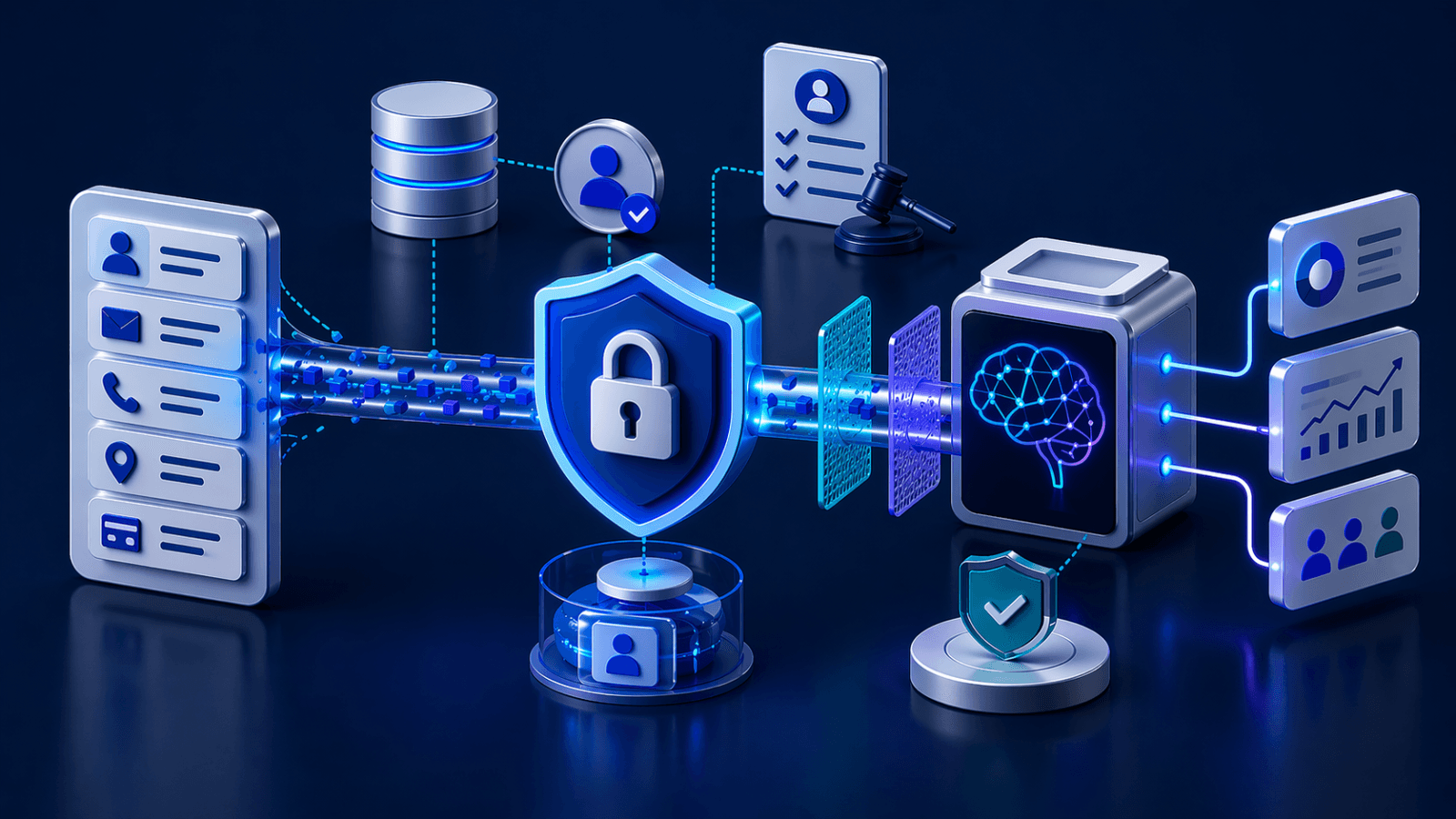
An AI Center of Excellence is a centralized, cross-functional structure responsible for governing, standardizing, and accelerating AI adoption across an enterprise. It is not a research lab. It is not a data science team renamed for optics. It is an operating function that sits at the intersection of strategy, governance, security, and execution.
The purpose of an AI CoE is threefold. First, it establishes a consistent enterprise AI strategy so individual business units are not making conflicting or duplicative technology bets. Second, it builds the AI governance framework, policies, and controls needed to deploy AI responsibly, without slowing innovation to a crawl. Third, it creates a mechanism for measuring AI adoption and business value so leadership can see, in concrete terms, what the AI investment is producing.
The strategic role of an AI CoE has shifted over the past two years. Early AI CoEs were framed mainly as innovation accelerators, tasked with proving out use cases. That mandate has not gone away, but it has been joined by an equally important one: risk containment. Regulators, customers, and boards are now asking pointed questions about model oversight, data handling, and accountability. An enterprise AI platform strategy without a governing body behind it is a liability, not an asset.
Done well, an AI CoE becomes the connective tissue between the executive vision for AI transformation and the operational reality of deploying it safely across dozens or hundreds of business processes.
Why Every Enterprise Needs an AI Center of Excellence
Skeptical executives sometimes ask whether a CoE is really necessary, or whether it is just another layer of bureaucracy. The honest answer is that the alternative to a CoE is not "no governance." It is inconsistent, invisible, ad hoc governance, which is worse.
Consider AI governance itself. Without a central function, governance ends up being whatever each business unit decides to do on its own, which usually means very little. Legal reviews contracts. Security reviews infrastructure. Nobody reviews the model's training data lineage, its failure modes, or its downstream business impact holistically.
Standardization matters for similar reasons. When five departments independently select five different vendors for overlapping use cases, the enterprise ends up paying for redundant capability, integrating disconnected systems, and losing any negotiating leverage it might have had as a single buyer.
Risk management is where the CoE earns its keep fastest. AI risk is not theoretical. Models drift, vendors change their data retention terms, and employees paste sensitive data into public tools without realizing the implications. A CoE with real authority can catch these issues before they become headlines.
Responsible AI and compliance are increasingly non-negotiable, particularly for enterprises operating across multiple jurisdictions with divergent AI regulation. A CoE gives the organization one place to track evolving requirements and translate them into practical AI policy rather than leaving each business unit to interpret regulation independently.
And despite the governance emphasis, the innovation case for a CoE is just as strong. Centralizing AI expertise means business units do not have to reinvent evaluation criteria, prompt engineering practices, or integration patterns every time they want to try something new. Operational efficiency improves because the organization stops solving the same problem in five different silos.
Core Responsibilities of an AI Center of Excellence
A well-designed AI CoE typically owns the following functions, though the exact scope will flex based on company size and industry.
Governance and policy creation. The CoE drafts and maintains the enterprise's AI policy, covering acceptable use, data handling, model approval workflows, and escalation paths for high-risk use cases.
AI standards. This includes technical standards for model evaluation, documentation requirements, and integration patterns, so that every new AI initiative does not start from a blank page.
Security oversight. AI security is distinct from traditional application security. The CoE works closely with the CISO's office on threats like prompt injection, model exfiltration, data leakage through AI interfaces, and third-party AI vendor risk.
Vendor evaluation. Rather than each department independently vetting Enterprise AI vendors, the CoE runs a structured evaluation process covering data privacy practices, model transparency, contractual protections, and total cost of ownership.
Risk assessments. Every significant AI use case should go through a documented AI risk assessment before deployment, categorizing it by potential impact on customers, employees, financial outcomes, or regulatory exposure.
Training and employee enablement. Governance without enablement creates shadow IT. The CoE is responsible for practical training that helps employees use AI tools effectively and safely, not just a compliance checkbox they click once a year.
Data governance. AI is only as trustworthy as the data behind it. The CoE partners with data governance teams to ensure training and input data meets quality, lineage, and privacy standards.
Model oversight. This covers ongoing monitoring for model drift, performance degradation, and unexpected behavior once a model is in production, not just at launch.
Compliance tracking. The CoE maintains a living inventory of regulatory obligations relevant to AI and maps them to internal controls.
Performance measurement. Ultimately, the CoE is accountable for demonstrating that AI initiatives are producing measurable business value, not just activity.
Who Should Be Part of an AI Center of Excellence?
One of the most common reasons AI CoEs fail is composition. Organizations either stack the CoE with technologists and exclude the business, or they staff it entirely with governance professionals who have no authority to actually ship anything. Neither works.
An effective AI CoE needs an executive sponsor, ideally someone at the C-suite level who can break ties and unlock budget. Without this, the CoE becomes an advisory committee with no teeth.
The CIO typically anchors the technology and infrastructure perspective, while the CISO ensures AI security is embedded from day one rather than retrofitted after an incident. Legal and privacy representation is essential, particularly given how quickly AI regulation is evolving across different markets. A compliance lead keeps the CoE grounded in actual regulatory obligations rather than generic best practice.
Risk management brings enterprise risk framework discipline to AI-specific threats. IT provides the operational backbone for deployment and integration. Representatives from key business units ensure the CoE's priorities reflect real operational needs rather than a purely technical wish list.
HR plays a bigger role than people expect, particularly around workforce impact, AI-related policy for employee tools, and change management. Data teams and AI engineers round out the group, bringing the technical depth needed to evaluate feasibility and translate governance requirements into working systems.
The mix matters more than the size. A twelve-person CoE with the right cross-functional representation will outperform a forty-person CoE stacked entirely with one function.
How to Build an AI Center of Excellence
Building an AI CoE is a sequencing problem as much as a design problem. Organizations that skip steps, particularly the early strategic ones, end up building governance theater instead of a functioning operating model.
1. Define business goals before anything else. Before drafting a single policy, get explicit executive alignment on what the enterprise actually wants from AI over the next 18 to 36 months. Cost reduction, revenue growth, customer experience, risk reduction, all of the above in different proportions. This becomes the north star that keeps the CoE from drifting into pure compliance theater or pure innovation theater.
2. Create the governance structure. Decide who has final decision-making authority, how escalations work, and how the CoE interfaces with existing governance bodies like a data governance council or enterprise data risk committee. Overlapping mandates without clear boundaries is one of the fastest ways to generate internal friction.
3. Build the policy foundation. Draft the core AI policy, acceptable use guidelines, and a tiered risk assessment framework. Keep the first version practical rather than exhaustive. A twenty-page policy nobody reads is less useful than a five-page policy everyone actually follows.
4. Assign clear ownership. Every AI use case in the enterprise should have a named business owner and a named technical owner. Ambiguous ownership is where AI risk quietly accumulates.
5. Select AI platforms deliberately. Rather than approving tools one by one as requests come in, define a shortlist of approved enterprise AI platforms that meet security, privacy, and integration standards. This does not mean freezing innovation, it means channeling it through a known, vetted pathway.
6. Establish risk controls. Implement monitoring for model performance, data handling, and usage patterns. Build a clear incident response path specifically for AI-related issues, since these often do not fit neatly into existing security incident playbooks.
7. Invest in employee education. Practical, role-specific training beats generic AI literacy modules. A sales team needs different guidance than an engineering team.
8. Measure success from day one. Define KPIs before launch, not after the first executive review meeting asks for results nobody has been tracking.
9. Treat the CoE as a continuous improvement function, not a one-time project. AI capability, vendor landscape, and regulation are all moving targets. A CoE that does not revisit its policies and priorities quarterly will be governing yesterday's risks.
Common Mistakes Enterprises Make
Even well-intentioned AI CoEs run into predictable failure patterns.
No executive sponsorship. A CoE without genuine executive backing has influence but no authority. It can recommend, but it cannot enforce.
No governance, just enthusiasm. Some CoEs form purely to accelerate adoption and skip governance entirely, which works right up until the first serious incident or audit finding.
Poor communication. If business units do not understand why the CoE exists or how to engage with it, they will route around it, which recreates the exact fragmentation the CoE was meant to solve.
Lack of visibility into existing AI use. Many organizations build a CoE without first conducting an honest inventory of the AI tools already in use across the business. You cannot govern what you cannot see.
No KPIs. Without defined success metrics, the CoE becomes vulnerable to budget cuts the moment leadership priorities shift, because nobody can point to measurable impact.
Buying tools before building strategy. Procurement moving faster than governance is one of the most common and most avoidable mistakes in enterprise AI adoption.
Ignoring compliance until forced to act. Waiting for a regulatory inquiry or customer audit to take AI compliance seriously is a reactive posture that costs far more than proactive investment.
How to Measure AI Center of Excellence Success
Executives will eventually ask whether the CoE is worth the investment. Come prepared with a real answer.
AI adoption metrics track how many approved use cases are live, how many employees are actively using sanctioned tools, and how adoption trends across business units.
Business value metrics tie AI initiatives back to revenue growth, cost savings, or productivity gains, ideally validated by the business unit itself rather than the CoE alone.
Risk reduction can be measured through the number of AI risk assessments completed, incidents avoided or caught early, and time-to-remediation when issues arise.
Compliance maturity tracks how well the organization is positioned against relevant regulatory frameworks, often benchmarked against a formal AI maturity model.
Employee engagement with training programs and self-reported confidence using AI tools appropriately gives a leading indicator of both adoption and risk.
Operational efficiency gains, cycle time reductions, and process improvements enabled by AI provide some of the most boardroom-friendly evidence of value.
Innovation metrics might include the number of new use cases piloted, time from idea to production, and reuse of shared AI components across teams.
Cost savings and ROI remain the metrics executives care about most, so the CoE should be able to show a credible, conservative estimate rather than an inflated one that invites scrutiny.
Future of Enterprise AI Centers of Excellence
The scope of AI CoEs is expanding again, this time around agentic AI. As enterprises move from single-purpose AI tools toward autonomous AI agents capable of taking multi-step actions across systems, governance needs to evolve accordingly. An agent that can execute transactions, modify records, or interact with customers unsupervised introduces a different risk profile than a chatbot that only generates suggested text.
Expect enterprise governance to shift toward continuous monitoring rather than point-in-time review. Static annual AI audits are poorly suited to systems that update, retrain, or behave differently based on new data. Regulatory readiness will also become a bigger part of the CoE mandate, as more jurisdictions finalize AI-specific regulation with real enforcement teeth.
Responsible AI will move from a values statement to an operational requirement, embedded directly into deployment pipelines rather than treated as a separate review step. The enterprises that treat their AI CoE as a maturing, adaptive function, rather than a structure they set up once and left alone, will be the ones best positioned for what comes next.
How Questa AI Supports Enterprise AI Governance
Building and running an AI CoE is ultimately a visibility problem as much as a policy problem. As organizations mature their AI governance programs, Questa AI can help improve AI visibility, governance, and operational oversight across the enterprise, giving CoE leaders a clearer, real-time picture of how AI is actually being used across the business.
Frequently Asked Questions